

Written by Olivia Hiskett
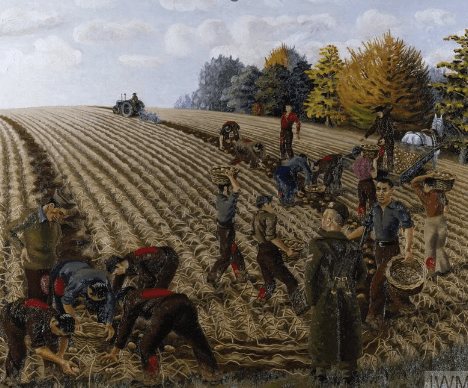
From 1942–1948, a population that peaked at five hundred thousand German and Italian prisoners of war (POW) were held in in camps and hostels across the UK. The accommodations for the POW ranged from canvas tents to custom-built barracks, spanning from Guernsey to Orkney. The camps were not solely for detention; they also served to fill labour shortages in wartime Britain, as well as sites of political re-education for prisoners. The ubiquity of these camps across World War II Britain would suggest prominence in the British memory landscape, yet they have been widely forgotten. Whilst the camps were tangible examples of how the war interacted with civilian life in the UK, they have rarely been explored as historical sources and largely neglected as sites of memory of the Second World War. The introduction of Axis soldiers into local communities, which the camps necessitated, led to changes in local demographics and understandings of nationalities. Furthermore, the voluntary integration of German and Italian POW into British society was largely successful, suggesting animosity between the nations dissolved rapidly.
Many of the POW camps remained in use until 1948, with their role transitioned into displaced persons camps as the war ended. However, the buildings that had stood as evidence of the camp systems in the UK quickly began to disappear. Post-war reconstruction initiatives meant that camps either began to be removed to reclaim agricultural land, were abandoned, or repurposed to house those working on farms. Today, only five camps of the fifteen hundred remain completely intact. Rural camps away from centres of population were also favoured for preservation, as there was a high demand for labour to remain on agricultural land. Despite the demolition of these sites, it did not mean the immediate dispersal of their inhabitants. From December 1946, prisoners were encouraged to engage with the general population, although POW accounts suggest that fraternisation was commonplace beforehand.
This fraternisation between POWs and civilians often took the form of aid. Many recognised the stress and conditions of the POWs and organised to assist them even at the risk of imprisonment themselves. British attitudes towards the POWs were so distinctly positive that they inspired policy change. The rules against fraternisation were ignored at such a scale that the war minister was forced to drop the law against his insistence. The integration and cooperation between groups that were enemies’ mere months before was recognised as remarkable by contemporaries. A Harvest Thanksgiving celebration in Hexham Abbey Northumberland was reported widely in the national press after volunteer POWs reclaimed as much as twenty-five hundred hectares of land. The service was attended by as many as a thousand POWs and four hundred locals. The reconciliation that took place between the locals and POWs across the country contributed to a new shared identity of a diverse post-war Britain. This is most clearly demonstrated in the almost eight hundred marriages between British women and POWs by mid-1948.
Essential to these reconciliations were British efforts to “denazify” German POWs. These attempts took the form of a newspaper printed in German and circulated to POWs– Wochenpost. During the war, the paper was largely unpopular, but by 1947 circulation had reached 110,000 despite the paper’s growing transparency that it was designed to re-educate. The problem of Nazi ideology was pertinent, especially when the outcome of the war was uncertain.
The experience of Italian POWs differed due to the Italian surrender in 1943. This meant that those Italians remaining in Britain were adopted as “co-operators” who volunteered to work where unskilled labour was scarce. Whilst there were undoubtedly fascists among these numbers, they were free to mix with local communities and even allowed to remain following the war.
However, POWs were not exclusively welcomed with open arms to remain in Britain after the war. Arguments in parliament suggested that POWs were perceived as burdens by some and a potential threat to British agricultural workers as they could undercut labour costs. Despite these concerns, the government recognised that POW labour was essential for the continuation of food production. They were so concerned about the impact that the repatriation of Italian POWs might have on productivity that they considered supplementing their loss with more German labourers. The importance of forced labourers to the British wartime and into the post-war economy cannot be understated, especially regarding the intensification of farming. This continued into the post-war era whilst awaiting the demobilisation of British servicemen. Perhaps this collaborative effort and social interaction allowed for the transition from enemy to ally, which took place in the localities to the camps. Testament to this assimilation and geniality between POWs and local populations is the 250,000 Germans who decided to stay rather than return to Germany.
However, it must be remembered that the uncertainty of post-war Germany may have made staying in Britain preferable to a war-torn home. Many testimonies of German POW’s stated their frustrations at their detainment and considered themselves exploited and isolated from their homes.
Whilst the reconciliation and continued presence of Italian and German soldiers demonstrates the ability of disparate groups to form communities, it must be placed within the context of the British Empire. It has been suggested that the ease of acceptance of integration of the POW hinged upon a crucial factor: their invisibility. The whiteness of the prisoners was significant. As Britain saw social unrest at the arrival of Caribbean immigrants, the invisibility of the POWs certainly played a role in their integration. Those who stayed in Britain were able to assimilate in a way that other immigrants were not, as whiteness was emphasised as a large part of British national identity.
The dissolution of POW camps across the UK created unique rural communities made up of friendships that would have seemed unlikely in the years beforehand. Although the official invitation of Italians and Germans to stay in Britain after the war was founded on acute shortages of labour, the social integration of these men shows that they were not seen as a purely transient population. Their invisibility against the wider British population may have contributed to their apparently seamless integration. This raises wider questions as to what shaped British public opinion on migration, given the contemporary backlash against those arriving from the former British empire.
Bibliography
Hellen, Anthony. “Temporary Settlements and Transient Populations the Legacy of Britain’s Prisoner of War Camps: 1940–1948” Erdkunde (1999)
Hellen, Ingeborg. “The Boys’ Own Papers: The Case of German POW Camp Newspapers in Britain, 1946-8” German Historical Institute London Bulletin 30.2 (2008)
Malpass, Alan. British Character and the Treatment of German Prisoners of War, 1939–48 Palgrave Macmillan. 2020.
Moore, Bob Prisoners of War: Europe: 1939-1956 Oxford: Oxford University Press, 2022.
Thomas, Rodger J.C. “PRISONER OF WAR CAMPS (1939 – 1948)” English Heritage (2003)
 Retrospect Journal