
Written by Kate Phillips
Dracula is not a Romanian story; it is a story about Romania written with a biased eye. In the novel, Dracula is not so much a “monster” as he is “other.” Instead of a villain origin story, we are given Dracula’s winding family history. Jonathan Harker, an English lawyer staying at Dracula’s castle in Romania, notes Dracula’s passion for his family, particularly their fight to gain independence from the Turks. However, in the scene where Dracula is telling Jonathan about his family, Jonathan appears startled, calm, and rational in the face of Dracula’s passionate, slightly creepy, and implicitly unhinged ramble about his past generations.
Stoker was living at a time when Western Europe was attempting to gain control over Eastern Europe, where Eastern Europeans were slowly moving westward, and where Western Europe, despite these ties, was still determined to view Eastern Europe as “the Other.” The idea of Europe at the end of the nineteenth century was one defined with tinges of elitism, colonialism, exoticism, and general bias. For as much inspiration as Stoker was to gain from Vlad Tepes and Romanian history, Stoker never visited any of the Balkan countries. Instead, most of his knowledge was gained from helping his brother, George, write his memoirs about fighting with the Turks against Romanian independence.
Romanian independence was an idea that England was very much opposed to. Dracula was published at the height of a certain uncertainty about the future stability of capitalism. When Western Europe struggled, they looked to the “other” Eastern Europe and devised ways to develop it for their own benefit. An example was Romania: which as a nation, was essentially, responsible for feeding England, being one of its top sources of grain. Eastern Europe was a canvas for those worried about capitalism to stake their fiscal and emotional investments. Romanian independence would threaten that confidence. The irony is that despite its obvious agricultural importance, many Western Europeans still viewed Eastern Europeans as “other,” and lesser.
Literary critic Patricia McKee argues that Jonathan being trapped in Dracula’s castle offers a speculative “reverse-colonialism” where Romania is in control. A common theme in the novel is the importance of understanding these chaotic, evil phenomena. Dr. Van Helsing, a Dutch doctor who later helps free Jonathan’s fiancée, Mina from Dracula’s spell, stresses to Jonathan the importance of opening his mind and letting go of narrow rationality. Helsing does this mainly to convince Jonathan of the existence of vampires, and to assure him despite the complex and disturbing ways needed to kill a vampire. Indeed, one of Jonathan’s “good” traits in the novel is his sense of duty in recording all the events that happen to him, no matter how disturbing. However, Jonathan is still, of course, a prisoner in Dracula’s castle, and later, when free, he experiences a sort of mental imprisonment as he is constantly paranoid about Dracula. McKee argues that the tension between Jonathan and Dracula directly reflects colonial tension between Britain and Romania. The West, like Jonathan, insists that they can understand the “other,” and use this only to inflate, not challenge, their sense of superiority.
It is also important to note that most of what Jonathan learns of Romania and most of what Helsing informs him is a “dark” history filled with evil spirits, wars, and other things that are stressed in an uncivilized and foreign nature. If Dracula is seen as representing these things, the ultimate “other” that is somehow both dangerous and inferior, Jonathan’s fiancée Mina is seen as everything Jonathan, a good white English man, should value. Mina is also rational, recording events in her diary and with a voice recorder. She is mature, polite, modest, and beautiful. She, too, travels, but unlike Jonathan’s ventures in Romania, she experiences the old Western Europe, meeting lovely strangers, staying in nice hotels and fostering a gentle, happy interest in various regional histories. Jonathan and Mina are both academic; Jonathan is seen as understanding the “darker” side of Europe, while Mina is safe, and, of course, in the West.
The “scariest” part of the novel is not when Jonathan is in Romania and trapped by Dracula but is when Mina is in London and meets a disguised Dracula there. The fear is clearly not one like Jonathan’s of imprisonment, but one of invasion. Of course, Dracula’s motivation for being in London is to woo Mina. However, it is revealed that Dracula’s cover story for Jonathan is that he wishes to buy property in London and become a true Englishman. In one of the first encounters between Jonathan and Dracula, Dracula suddenly becomes very angry that he cannot master Jonathan’s proper English accent perfectly. Author Tyler Tichelaar argues that Dracula’s “invasion” of London reflects a bigger fear at the time of London being overcrowded by “the other,” and, on a social scale, the British race itself being threatened. Xenophobia was certainly present during Stoker’s time – and Dracula being seen as his most evil not when he is in Romania, but when he is in England, does seem to reflect, even if subtly, those fears.
Romanian independence, immigration to London, capitalist fear, and the praise of reason are all issues that are conflated in Bram Stoker’s Dracula. Stoker of course was not responsible for the sentiments of his time, but it certainly could be argued that Dracula contributed to or at least exasperated them. A colonial analysis of Dracula certainly calls into question certain things authors can do when writing about places other than their own so that these places, their people and their history do not become that of “the Other.”
Bibliography
McKee, Patricia. “Racialization, Capitalism, and Aesthetics in Stoker’s ‘Dracula.’” NOVEL: A Forum on Fiction, vol. 36, no. 1, fall 2002, pp. 42-60.
Tichelaar, Tyler. “Racism in Dracula: The Romanian Perspective.” The Gothic Wanderer, WordPress, 6 Feb. 2020, thegothicwanderer.wordpress.com/2020/02/26/racism-in-dracula-the-romanian-perspective/.
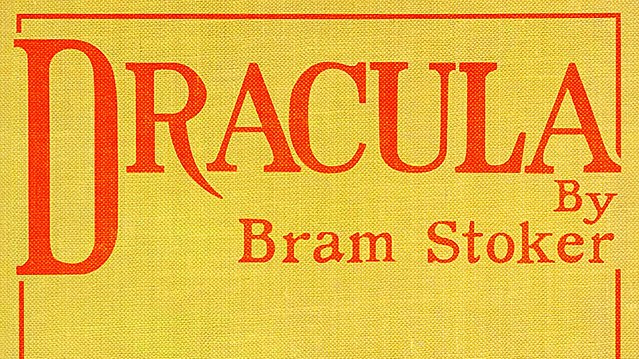
Featured image credit: Dracula 1st ed cover reproduction, 1897. Accessed via Wikimedia Commons: https://commons.wikimedia.org/wiki/File:Dracula_1st_ed_cover_reproduction.jpg
 Retrospect Journal
