
Written by Marnie Camping-Harris
From the end of the medieval period to the nineteenth century, a dramatic shift in control of sexuality, gender and sex was noticed; from the church to the powers of the state and those in the medical profession. Notable events from this intermittent time had a large effect on this shift in control. For instance, the Protestant Reformation, starting in 1517, recognised the failings of the Catholic Church, calling for different ways for religion to be understood, with the French Revolution of 1789 confirming these beliefs and moving power from the church to the state. Moreover, emerging in the seventeenth century, the Enlightenment created the mainstream concept of a medical field and profession. Ultimately, all of these instances would produce a profound effect on intermarital relationships in Europe, from the nineteenth to early twentieth centuries. This profound effect can be identified in the increased accessibility of divorce, new medical concepts surrounding female sexuality, and the idea that bad sex needed to be rectified.
A noticeable element of the nineteenth and early twentieth centuries was the shift of control from church to state, with the latter now being predominantly in charge of most matters, especially topics surrounding sex. This shift ultimately affected intermarital relationships as the state started to make divorces more accessible and the reasons for wanting one were increasingly being recognised and understood. In centuries prior to our period of focus, the power of the Catholic Church had been repeatedly questioned, coming to an end at events such as the Protestant Reformation in 1517 and the French Revolution in 1789. While the Protestant Reformation did not primarily deal with matters relating to sex, sexuality or gender, it paved the way for people to openly question the church’s power and involvement in their lives. Prior to this date, the Catholic Church was the only avenue for people to learn about sex, and their predominant viewpoint was that chastity was the best and purest option, but that sex was allowed for only reproductive purposes.
Acting like a catalyst for the Protestant Reformation, Luther’s Ninety-Five Theses was only based on criticism of indulgences, however, anti-Catholic and anti-papal feelings were widespread across Europe at this time. The idea that people’s reasoning for holding these thoughts was due to the over-involvement of the church in their sex lives is not unfeasible. Yet it was the French Revolution that really shifted the control of sex from church to state, which abolished laws that they deemed were solely based on religious ideas.
For instance, in 1791 sodomy laws were repealed, making non-reproductive sex legal in France and, most importantly, not punishable by death. Therefore, going into the nineteenth century, Europe’s view on sex and relationships was evolving and change was imminent. A notable change was the state’s view on divorce, spearheaded by women’s rights movements. Before this point, divorce was virtually and legally impossible. Now, although it was still difficult to obtain a divorce, grounds for one included: infidelity, bigamy, desertion, unnatural fornication, sexual abuse of a minor, serious neglect of martial duties and serious mistreatment from a spouse. As expected, divorce courts heavily favoured the husband, unless, however, he was the cause of any of the incidents mentioned above. T
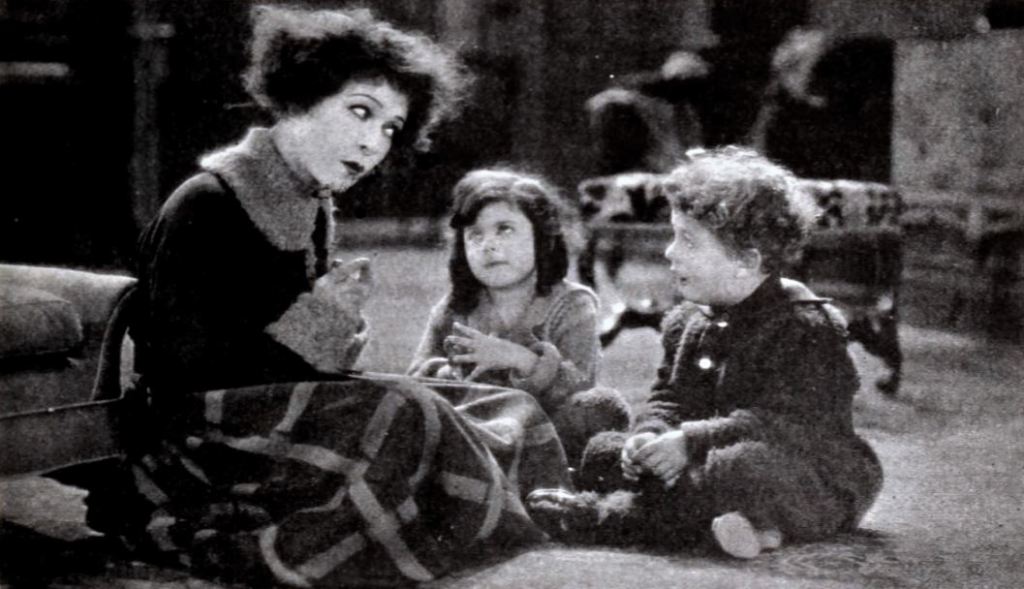
he mainstreaming of divorce can be identified in contemporary dramatics of the time, such as Henrik Ibsen’s play A Doll’s House, which was first published in Norway in 1879. Ibsen’s play follows Nora, who, in an effort to protect her husband, takes out a loan without his knowledge and is now suffering the consequences of such an action. At the denouement of the play, Torvald discovers Nora’s secret and rages at her for the shame he will bring to him and their family. A sudden change of events, reveals that the couple are free from any obligations to the loan, causing Torvald to renege on his anger and try to make up with Nora. However, Nora has had enough and tells her husband that she is going to leave him and the children so that she can discover who she truly is. Ibsen’s play possesses relative feminist undertones, appealing to women at the time who may feel confined in their marriages, but at the same time worrying the husbands of such women, for fear that, like Nora, their wives will decide to leave them, allowing for them to file for divorce on the grounds of desertion. This proves that even though divorce was beginning to be mainstreamed at the turn of the twentieth century, it was still viewed as shameful. Nevertheless, the shift in power from the church to the state heavily affected intermarital relationships by making divorce more accessible.
Alongside this increase of state power, a recognition for the medical field and profession was also introduced. Largely due to the Enlightenment’s call for ‘reason’ over church teachings, medicine began to be studied and explored, not as a form of witchcraft or heresy but as a registered profession. Fields within the medical realm also started to be introduced during the nineteenth century, with male professionals now overseeing female gynaecological matters, instead of previous midwives. With the creation of this newly defined field of work came new concepts and diseases related to female sexuality.
Hysteria was in circulation before the nineteenth century but is one of the diseases that is more commonly associated with this time; writings and treatment for hysteria started to be circulated from the mid-1800s. According to Robert Brudnell Carter, hysteria is identified more commonly in women than in men, largely due to the idea that sexual desire had a more profound and immense effect on women. In his writings, Brudnell Carter noted that women who were suffering from hysteria tended to exhibit short attacks of laughter or crying as well as energetic and involuntary movements. Without treatment, these women could either enter a period of catalepsy or a coma. What is also notable from Brudnell Carter’s writing is how he appears to blame this increase in hysteria on societies practicing free expression; was this a criticism of a shift in power from church teachings, as mentioned before, or was he calling for a need of more state and medical control? If the answer was the latter, then an increase in medical control can certainly be identified in the works of Isaac Baker Brown.
Baker Brown also recognised an increase in hysteria among women, and in 1866 he introduced a treatment plan that he believed was effective in not only curing hysteria, but also catalepsy and epilepsy in women: this was known as clitoridectomy. This barbaric and cruel procedure involved cutting or burning off the clitoris. Baker Brown’s reasoning for such treatment came from his observation of how women suffering from these disorders masturbated, claiming that masturbation was the cause for their disease. Ultimately, however, this practice was heavily scrutinised by Baker Brown’s peers, and in 1867 his treatment was debunked, and he was removed from the Obstetrical Society.
This increase in medical power heavily affected intermarital relationships because it gave an avenue for husbands to diagnose their wives with diseases that, as they saw it, summarised the issues they were potentially dealing with in their marriage. For instance, if the wife was sadder than usual, had a heightened or depleted sex drive, or had been caught masturbating, then the husband could now take her to a doctor to be diagnosed; and, most importantly, the blame would usually always be placed upon the wife.
However, also within the medical field were those who appeared to care about the sex between a married couple, and in the early twentieth century, an epidemic of sorts was identified by some medical professionals: an epidemic of bad sex. Physicians like Theodoor Hendrik Van de Velde claimed that “sex was the foundation of marriage” and, therefore, it should be taught so that couples can maximise their pleasure, and subsequently their marriage. On the other hand, Edward Ross Dickinson argued that sex between married couples was naturally incompatible due to the assigned natures of each sex (heterosexual marriage being the only form available at this time). Nonetheless, Van de Velde’s work is a great example of how times had really changed and ultimately how there was now a profession that truly cared for intermarital sex.
Like those diseases mentioned above, frigidity was defined as the complete loss of interest in sleeping with one’s husband; the blame being placed on the wife for this loss of interest. However, Van de Velde poses a different cause for frigidity, claiming that men who do not fully satisfy their wives, in turn make her frigid. In the past, sex was most definitely seen as ‘something done to someone’ and in most cases the man was the active partner, with the woman being passive. This is what Van de Velde was calling for the end of; for the sex between married couples to be described as a union, being done together, not to each other. From the stance of a medical professional, Van de Velde approves and endorses hand play as well as oral sex, which he names as the “genital kiss”, going so far as to describe how each act should be done. Another aspect that proves how much intermarital relationships had changed, is Van de Velde’s claim that “impregnation is not necessarily a part of the process of sexual union”; a claim that would be deemed as blasphemous if made in the medieval period.
Ultimately, Van de Velde demonstrates how far intermarital relationships have been allowed to come, since the shift in control from the church to state and medical affairs. He addresses his work to married men, surprisingly seeing them as the cause for this epidemic of bad sex, but most importantly to those of the medical profession. In an effort to ensure the rectification of this epidemic, Van de Velde tells those who are unsure of any terminology used to ask a doctor for clarification or further explanation, proving how sex was now under their jurisdiction.
Overall, an increase in state and medical control hugely affected intermarital relationships during the nineteenth and early twentieth centuries. With thanks to events such as the Protestant Reformation, the Enlightenment and the French Revolution, the state and medical professionals were now in charge of how sex, sexuality and gender was controlled. This control and profound effect on intermarital relationships can ultimately be identified through the increased accessibility of divorce, new medical concepts surrounding female sexuality, and the call for rectification of bad sex.
Bibliography:
Edward Ross Dickinson, “A Dark, Impenetrable Wall of Complete Incomprehension: The Impossibility of Heterosexual Love in Imperial Germany” Central European History, 40, 3, (2007)
Elizabeth Sheehan, “Victorian Clitoridectomy: Isaac Baker Brown and His Harmless Operative Procedure”, Medical Anthropology Newsletter, 12, 4, (1981)
Henrik Ibsen, A Doll’s House (1879)
Robert Brudnell Carter, On the Pathology and Treatment of Hysteria (London, 1853)
T. H. Van de Velde, Ideal Marriage: Its Physiology and Technique (London, 1926)
Featured Image Credit: A Doll’s House (1922) via Wiki Commons
 Retrospect Journal
_-_10.jpg)