
Written by Sam Marks
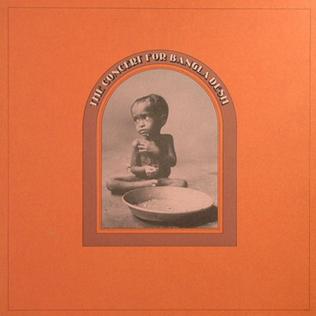
On August 1, 1971, George Harrison stunned audiences at Madison Square Garden. While the former Beatles guitarist was no stranger to rapturous crowds, the concert attendees were being exposed to something they had never experienced before: a benefits concert. The Concert for Bangladesh was a collaboration between Harrison and sitarist Ravi Shankar to raise aid donations to help alleviate Bangladesh’s dire situation. A cyclone had ravaged the country and the Liberation War from Pakistan had led to a genocide being committed.
The partition of India from Britain in 1947 saw the creation of two Muslim-majority states in British India’s northern zones. West Pakistan (now Pakistan) and East Pakistan (now Bangladesh) were culturally and geographically separate from each other with India in between. Though East Pakistan accounted for most of the population, political power was concentrated in the West.
Friction between the East and West grew rapidly from the 1940s to the 1970s as the government made up of Western officials pursued various measures to suppress the culture of the East. In 1948, Governor-General Muhammad Ali Jinnah declared that only Urdu would be the federal language of Pakistan despite the East’s native language of Bengali. Bengali was spoken by 56% of Pakistan’s population and several protests against language discrimination were met with police firing squads. East Pakistan was also funded significantly less than the West and Bengalis made up only 5% of Pakistan’s military officers.
By the 1960s, Pakistan had undergone two brutal military dictatorships Ayub Khan and Yahya Khan, both of whom deposed elected East Pakistani leaders. In 1966, East Pakistani sovereignty formed a significant Six Point movement which advocated for greater autonomy in East Pakistan led by politician Sheikh Mujibar Rahman. Rahman demanded that Pakistan as a whole become a federal country where each province had the power to tax, have separate but exchangeable currencies, and even separate militaries but united by a supreme parliament that was responsible for defence and foreign affairs. The proposals were vigorously opposed by the West, but soon the tension between the two provinces would snap.
In November 1970, the Bhola cyclone hit East Pakistan, killing 300,000 people in what is regarded as the deadliest storm of the 20th century. East Pakistani political leaders accused the government of neglecting the disasters. President Yuhya Khan himself admitted the making a mistake in underestimating the magnitude of the storm, launching calls for him to resign and politically supercharging East Pakistan for greater autonomy.
In 1970, Rahman’s Bangladesh Awami Legaue, won the legislative elections by a massive landslide, winning 167 of the 313 seats in the legislature. However, West Pakistani refused to allow Rahman to become prime minister, proposing that there should be a separate prime minister for each province. Outraged by this and furthering pressure to join a coalition government with the Western-based People’s Party, Rahman delivered a speech on March 7 1971 urging every house in East Pakistan to prepare for a struggle for independence.
Protests set off in East Pakistan and Bengali soldiers mutinied against Western-aligned officers as they tried to stop the civil unrest. The province underwent a general strike and later the Awami league banned government work from Western officials. On March 25, 1971, Rahman declared Bangladesh Independence Day shortly, which later reached the wider public after being broadcast on the radio in Bengali on March 26. The day saw West Pakistan act upon a final attempt to pacify the independence claims of their former province.
On March 26, the Pakistan army began conducting Operation Searchlight under the instruction of Yuyha Khan to “kill 3 million [Bengalis] and the rest will eat out of [Pakistan’s] hands”. All foreign journalists were deported from East Pakistan as Operation Searchlight oversaw genocide against Bengalis that is independently estimated to have killed between 125,000 and 505,000 Bengalis. By April 1971, the Mukti Bahini (Bangladesh Forces) was created by former military commanders in East Pakistan to resist the insurgency from the West. It was around this time that George Harrison was made aware of the dire situation in Pakistan.
Ravi Shankar, a sitarist and friend of George Harrison brought the refugee crisis and humanitarian disaster in his former home to the former Beatles’ attention. A UK Sunday Times article published in June 1971 by Pakistani journalist Anthony Mascarenhas exposed the atrocities committed by the Pakistani military in Bangladesh in full horror to a western audience. Harrison, already motivated by discussions with Shankar, began to organize a relief concert for Bangladesh.
By August 1971, Harrison and Shankar had organized two concerts in Madison Square Garden to raise money for the crisis in Bangladesh. A wide range of artists from ex-Beatle Ringo Starr, Billy Preston, Eric Clapton, and Bob Dylan performed. 40,000 people attended the concerts and $250,000 ($1.9 million in July 2024) was donated to UNICEF to administer funds for East Pakistan. Aside from the initial intention of the Concert of Bangladesh, it started a long-lasting legacy of musical performances being used to benefit a certain cause.
Harrison’s song titled “Bangla Desh” was a direct callout to his audience to provide aid to the people of East Pakistan and a call for greater media attention to focus on Bangladesh. The live album release of the Concert for Bangladesh topped album charts and went on to win a Grammy for Album of the Year in 1973 with all purchase profits going to support UNICEF. Total revenue from Harrison’s album is estimated to be $12 million.
Shankar would remark decades later that the concerts had been a success because “the whole world knew Bangladesh’s name”. He, Harrison, and Harrison’s manager Allen Klein received UNICEF’s “Child Is the Father of Man” award for their dedication to raising funds for Bangladesh. A statue of Harrison is displayed in the Bhashkorja Garden in Dhaka and he remains a widely praised figure in Bangladesh for his efforts to support their relief effort.
Beyond the success of the Concert in raising money and awareness of the tragedies in Bangladesh, it was successful in modernizing and popularizing the practice of benefit concerts. In 1985, Live Aid was inspired by the Concert for Bangladesh and took place in London and Philadelphia to raise awareness of the Ethiopian famine. Performances from Freddie Mercury and USA for Africa’s “We Are the World” have gone down in history as some of the most effective musical performances for charity. To this day, charity concerts remain a viable method for promoting and fundraising for a cause. While other concerts have eclipsed the Concert for Bangladesh in their notoriety, Harrison’s and Shankar’s efforts effectively modernized the practice of musical celebrities using their platform to donate to causes.
Bibliography
Clayson, Alan, and Mike Read. George Harrison. Abridged edition. Sanctuary Publishing Ltd, 2003.
Concert for Bangladesh Revisited with George Harrison and Friends. Documentary. Apple Corps, 2005.
Dummett, Mark. “Bangladesh War: The Article That Changed History.” BBC News, December 15, 2011, sec. Magazine. https://www.bbc.com/news/world-asia-16207201.
Greene, Joshua M. Here Comes the Sun: The Spiritual and Musical Journey of George Harrison. Annotated edition. John Wiley & Sons, 2008.
Huntley, Elliot. Mystical One, George Harrison: After the Break-Up of “The Beatles.” Toronto ; Buffalo: Guernica Editions,Canada, 2003.
Leng, Simon. While My Guitar Gently Weeps: The Music of George Harrison. Hal Leonard Corporation, 2006.
Rodriguez, Robert. Fab Four FAQ 2.0: The Beatles’ Solo Years, 1970-1980. Backbeat Books, 2010.
“The George Harrison Fund for UNICEF | UNICEF USA.” Accessed September 10, 2024. https://www.unicefusa.org/about-unicef-usa/partnerships/foundations/george-harrison-fund.
Featured Image Credit: “File: The Concert For Bangla Desh.Jpg,” in Wikipedia, January 20, 2015, https://en.wikipedia.org/w/index.php?title=File:The_Concert_For_Bangla_Desh.jpg&oldid=643438330.
 Retrospect Journal
