
By Aliya Okamoto Abdullaeva
Disclaimer: All information was last updated on March 14th, 2024.
According to the United Nations Geneva Convention, the current definition of a genocide encompasses the deliberate perpetuation of acts which aim to wholly or partially destroy a national, ethnical, racial or religious group. These acts include the killing, causing of serious bodily or mental harm, and intentionally inflicting conditions of life that bring about the physical destruction of members of a certain group. In a region overlooking the east of the Mediterranean Sea in West Asia, these exact acts are carried out in broad daylight.
Since 7 October 2023, the Israeli-led genocide against the Palestinians in the Gaza Strip has seen over 60 per cent of housing units damaged or destroyed by carpet bombing in the region. The destruction is indiscriminate, as 386 educational institutions, 155 medical facilities, as well as places of worship, including 223 mosques and three churches have been demolished by Israeli forces in the name of counterterrorism and collective punishment.
Meanwhile, Israel continues to establish settlements in the Occupied Territories, with approximately 700,000 Israelis, constituting about 10 per cent of the Israeli population, residing in the West Bank and East Jerusalem as of September 2023. Despite the blatant violation of international law—as Israelis choose to ignore the Green Line, a drawn boundary between Israel and the Occupied Territories—the government persists in encouraging its citizens to move into authorised settlements. Statistics on Israel’s annual population growth highlight an overall trend of greater growth rates in settler populations in comparison to population growth within the State of Israel, emphasising the expeditious and pervasive nature of these settlements. In 2017, the figures stood at a 3.5 per cent and 2 per cent increase respectively, with 2020 witnessing relatively similar numbers.
Complimenting settlement clusters, vast networks of military checkpoints and bypass roads were established, connecting settlements within the West Bank to each other as well as to cities in Israel. Route 60, beginning in the city of Nazareth, located within the State of Israel, pierces southward through the heart of the West Bank and out. Scattered around the highway are Israeli settlements and outposts which continue to extend and expand deeper into Palestinian territory. The relentless construction of settlements and roads carves Palestinian territories into geographic isolates, while Israeli settler communities are allowed to prosper in urban neighbourhoods.
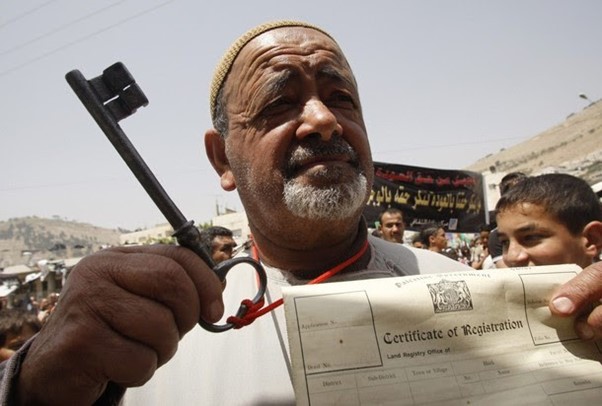
The incentive to institutionalise the establishment of settlements for strategic and military means followed Israel’s triumph in the War of 1967, which saw the annexation and occupation of the West Bank and Gaza, consequently placing the territories under Israeli authority. Settler colonialism, pursuing the conquest to eventually claim sovereignty over the Occupied Territories and crucially the historically significant capital of Jerusalem, led to further expulsions of the Palestinians, as well as the closures and confiscations of Palestinian-owned land, homes, and businesses to prevent return, with many becoming refugees for a second time. The Jordan Valley, initially housing approximately 85,000 Palestinians, saw the population plummet to around 10,000 post-1967. This rhetoric has been echoed since the establishment of the State of Israel in 1948, when over 750,000 Palestinians were forcibly displaced while their villages were burned and destroyed, having to settle in refugee camps within and outside the borders of historic Palestine.
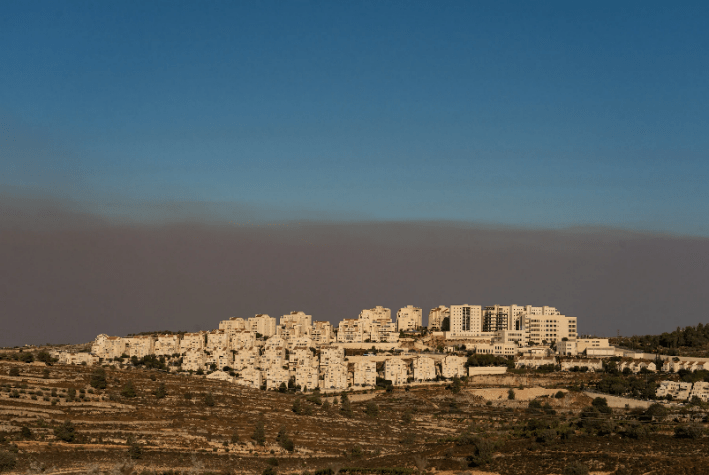
The establishment of the Etzion Bloc, the first settlement to be built after the War of 1967 in the Occupied Territories, came to be a symbol of rebirth in the collective Israeli psyche. The settlements of Etzion, founded by Jewish settlers in the 1940s, would witness the massacre of 127 people by the Arab Legion during the 1948 War. Initially scarcely populated, the settlement is now inhabited by over 40,000 Israelis and came to inspire numerous projects and plans which shadowed Palestinian land with settlements.
The Etzion Bloc fell in line with the Allon Plan which proposed the creation of a ‘security belt’ for Israel through establishing settlements along the Jordan River, breaking international law in the name of defence. The reassignment of cultivable Palestinian land to Israeli settlers, and the ironic employment of Palestinians to work on the stolen land, as well as build settlements further highlighted the disparity between the two peoples. Ultimately, the restricted Allon Plan, despite not becoming fully realised, became the basis of Israel’s current policy of settlements.
In addition, before the blockade of Gaza in 2007, the territory was also victim to the creation of Israeli settlements, although not to the scale witnessed by the West Bank and East Jerusalem. Isolated, overcrowded, and bordering Egypt, despite settlements running across the Mediterranean coast, the settler population remained low, with most settlers relocating elsewhere. Nonetheless, the lands of Gaza, as well as of the West Bank were controlled through unjust laws of land acquisition, which enabled the Israeli government to claim possession over them.
The intensification of settlement building incongruously coincided with the peace talks between Israel and the PLO during the 1990s and early 2000s. During this period, Israeli politics also saw a rise in power and popularity of the right-wing Likud Party, with notable members including Benjamin Netanyahu, who, holding office in 2023, was also head of State between the years 1996—1999, as well as 2009—2021. The prime minister of Israel at the time of the peace talks, Ehud Barak, contradicting his commitment to the Oslo Accords, designated a budget of 500 million dollars for settlements, constructing 1,943 housing units in the year 2000 alone. Additionally, tax concessions and financial incentives were provided to further promote a movement of Israelis into settlements, subsequently nearly doubling the settler population in the years following the Oslo Accords. This momentum has not stopped.
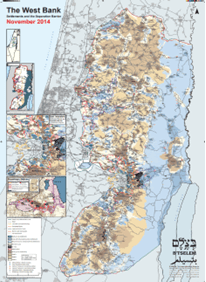
The impact of Israeli settlements is multifaceted and profound. The building of settlements fractured the continuity of Palestinian land, thus limiting the opportunities for political organisation and cohesion. In essence, with Israeli settlements poking holes in the physical space of the Palestinians, the prospect of a sovereign state becomes a more challenging endeavour. Additionally, the infrastructure accompanying the settlements such as military checkpoints seek to ensure the security of Israeli settlers, while further monitoring and restricting the movement of Palestinians within the Occupied Territories. The appropriation and drainage of Palestinian water resources in favour of Israeli settlers also leave Palestinian communities vulnerable and dependent on Israel. Israel’s attempts to postpone Palestinian autonomy can further be discerned in the acceleration of settlement projects during the Camp David Accords in 1978, which proposed the establishment of a self-governing authority in the West Bank and Gaza.
Importantly, an increase in settler populations also consequently saw the rise of settler violence towards Palestinians living in neighbouring villages, with 191 incidents reported during the period between November 2022 and October 2023.
Returning to the Gaza Strip, despite the decades of destruction and oppression, countless stories of life and resistance are heard, from swimming in the Mediterranean Sea and singing folktales to harvesting Palestinian olives and establishing cultural museums. The physical space of the Palestinians, from the coast to the holy sites, the villages to the low mountains, are all reflections of their longstanding history and culture. Philosopher Gaston Bachelard analogised the home as a ‘symbol of the self.’ The destruction of the physical extension of the self, from the natural landscapes to its buildings and streets subsequently destroys community identity, creating a metaphorical death of space as much as of life. The uprooting of Palestinian olive trees and the bombing of the Al-Qarara Cultural Museum by Israeli airstrikes are moments of such deaths. However, pillars of Palestinian history still stand, whether it is the sacred Al-Aqsa Mosque or the only surviving building in the village of Saliha, one of the 400 that were depopulated during Israel’s ethnic cleansing program in 1948. These monuments are a constant and powerful visual reminder of the people who gave and still give breath to the land, despite the sprouting of Israeli settlements, that pollute its landscape and aim to erase it of its people.
Bibliography
Abu-Lughod, Janet. “Israeli Settlements in Occupied Arab Lands: Conquest to Colony.” Journal of Palestine Studies 11, no. 2 (1982): 16–54. https://doi.org/10.2307/2536268
Bier, Jess. “Removing Borders, Erasing Palestinians: Israeli Population Maps after 1967.” The Reader, MIT Press. (2021): https://thereader.mitpress.mit.edu/removing-borders-erasing-palestinians-israeli-population-maps/
Darley, Gillian. “Intimate Spaces.” Aeon. (2017): https://aeon.co/essays/how-gaston-bachelard-gave-the-emotions-of-home-a-philosophy
Hendrix, Steve, Rubin, Shira and Taha, Sufian. “Highway of Hope and Darkness.” The Washington Post (2021): https://www.washingtonpost.com/world/interactive/2021/israel-palestinians-two-state-solution/
Hoyle, Charlie. “Interactive Timeline: The History of Israeli Settlements since 1967.” The News Arab (2019): https://www.newarab.com/analysis/interactive-timeline-history-israeli-settlements-1967
Rempfer, Kyle. “Israeli Operations Uprooted Palestinians in 1948. Many Fear A Repeat.” The Washington Post (2023): https://www.washingtonpost.com/history/2023/11/03/israel-nakba-history-1948/
Roy, Sara. “Why Peace Failed: An Oslo Autopsy.” Current History: A Journal of Contemporary World Affairs 101. (2002): 8-16. https://doi.org/10.1525/curh.2001.101.651.8
“Hostilities in the Gaza Strip and Israel – Reported Impact, Day 159.” United Nations Office for the Coordination of Humanitarian Affairs (2024): https://www.ochaopt.org/content/hostilities-gaza-strip-and-israel-reported-impact-day-159
“Statistics on Settlements and Settler Populations.” B’tselem (2019): https://www.btselem.org/settlements/statistics
“State of Palestine: Israeli Settlements in the Occupied Palestinian Territory, Including East Jerusalem, and in the Occupied Syrian Golan.” United Nations Office for the Coordination of Humanitarian Affairs (2024): https://www.ohchr.org/sites/default/files/2024-03/Palestine-March2024.pdf
https://www.vox.com/world/2016/12/30/14088842/israeli-settlements-explained-in-5-charts
https://www.britannica.com/topic/Likud
Abu-Lughod, Janet. “Israeli Settlements in Occupied Arab Lands: Conquest to Colony.” Journal of Palestine Studies 11, no. 2 (1982): 16–54. https://doi.org/10.2307/2536268
Bier, Jess. “Removing Borders, Erasing Palestinians: Israeli Population Maps after 1967.” The Reader, MIT Press. (2021): https://thereader.mitpress.mit.edu/removing-borders-erasing-palestinians-israeli-population-maps/
Darley, Gillian. “Intimate Spaces.” Aeon. (2017): https://aeon.co/essays/how-gaston-bachelard-gave-the-emotions-of-home-a-philosophy
Hendrix, Steve, Rubin, Shira and Taha, Sufian. “Highway of Hope and Darkness.” The Washington Post (2021): https://www.washingtonpost.com/world/interactive/2021/israel-palestinians-two-state-solution/
Hoyle, Charlie. “Interactive Timeline: The History of Israeli Settlements since 1967.” The News Arab (2019): https://www.newarab.com/analysis/interactive-timeline-history-israeli-settlements-1967
Rempfer, Kyle. “Israeli Operations Uprooted Palestinians in 1948. Many Fear A Repeat.” The Washington Post (2023): https://www.washingtonpost.com/history/2023/11/03/israel-nakba-history-1948/
Roy, Sara. “Why Peace Failed: An Oslo Autopsy.” Current History: A Journal of Contemporary World Affairs 101. (2002): 8-16. https://doi.org/10.1525/curh.2001.101.651.8
“Hostilities in the Gaza Strip and Israel – Reported Impact, Day 159.” United Nations Office for the Coordination of Humanitarian Affairs (2024): https://www.ochaopt.org/content/hostilities-gaza-strip-and-israel-reported-impact-day-159
“Statistics on Settlements and Settler Populations.” B’tselem (2019): https://www.btselem.org/settlements/statistics
“State of Palestine: Israeli Settlements in the Occupied Palestinian Territory, Including East Jerusalem, and in the Occupied Syrian Golan.” United Nations Office for the Coordination of Humanitarian Affairs (2024): https://www.ohchr.org/sites/default/files/2024-03/Palestine-March2024.pdf
https://www.vox.com/world/2016/12/30/14088842/israeli-settlements-explained-in-5-charts
https://www.britannica.com/topic/Likud
Doc.1_Convention on the Prevention and Punishment of the Crime of Genocide.pdf
 Retrospect Journal