
Written By: Elena Fritzsch
Content Warning: Sexual Assult and Rape
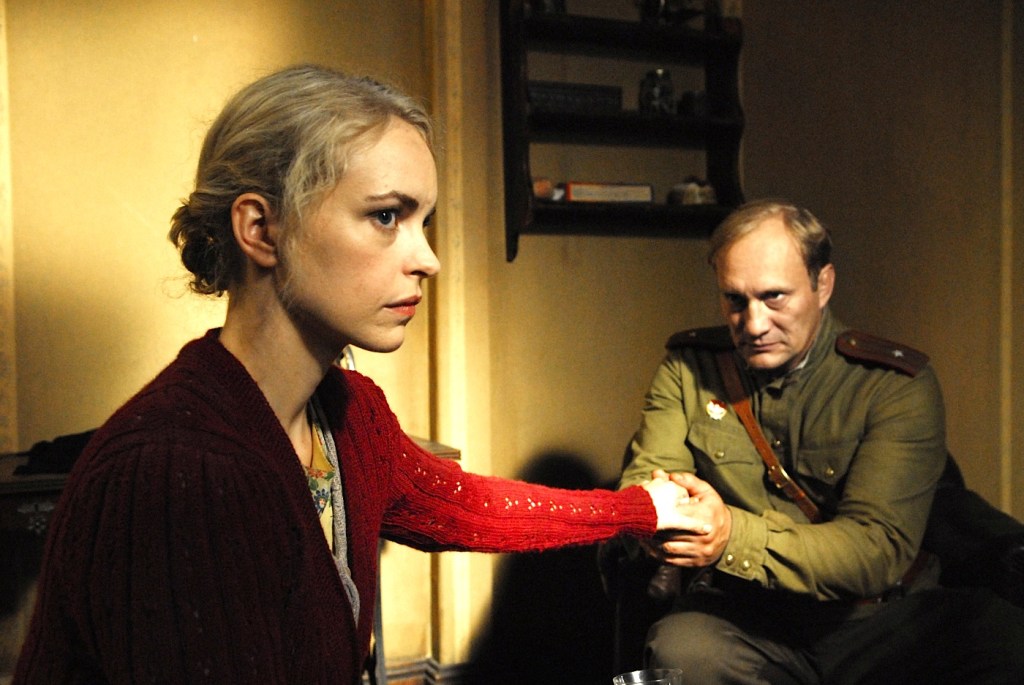
When a historian considers a text, they think about the context; who is writing; why they are writing; what they are writing for. Anonymous texts, thus, sit as a sort of anomaly because they offer us less of an idea of the position and perspective of the author. A Woman in Berlin is a journalistic piece, published in 1954, that explores one woman’s attempt to survive post-war Berlin after the Soviet occupation; it is also an anonymous memoir.
The memoir covers the period between 20 April and 22 June 1945, during the capture and occupation of Berlin by the Red Army; it depicts the widespread rape of civilians by Soviet soldiers, including the rape of the author. It is estimated that around two million women were raped by Soviet troops in East Germany after the liberation of Berlin; this anonymous work exists as one of the most famous accounts of wartime sexual violence. The first English edition appeared in 1954 in the United States, to huge success, and was followed by translations into Dutch, Italian and Japanese amongst other languages. A German language edition was published five years later in Geneva and received a minor and critical response, with accusations of the text insulting the honour of German women. Topics of sexual assault and collaboration for survival were often undiscussed in the post-war period, particularly in East Germany (the German Democratic Republic) where Soviets were often presented as the liberators of Germany from Nazism, and where criticism of the state was met with repression. After this critical reception in her home country, the author refused to publish another edition in her lifetime.
Whilst the author’s identity was controversially revealed soon after her death in 2001 and the books subsequent second publication, her position as a woman who suffered rape and sexual assault at the hand of Soviet soldiers, as well as candid discussions of the use of her own sexuality to survive, highlights the role of anonymous texts in opening conversations otherwise silenced. When one considers legacies of shame in post war Germany, ideas of post war guilt, collective responsibility and transgenerational haunting comes to mind, driven by historians like Niven and Schwab. Whilst the concept of national guilt of Nazi atrocities and the Holocaust has been explored and disputed, there are many stories and identities that are neglected in the creation of a collective imagined community that experiences this guilt. When we consider shame as a lens for the wider understanding of a society and its norms, and question who is shaming, who is being shamed, and who is allowed to speak up about this shame, we open the conversation to include those otherwise excluded.
Though the text was not well received in East Germany at the time and did not open an immediate conversation about mass rape, it still exists as one of the most famous wartime accounts. Through presenting the actual experience of women in Berlin it provides a graphic and unflinching perspective of what happened. The discussion of other women’s shared experiences, the sense of solidarity conveyed, and the detailing of the practical nature of living in a city largely destroyed, all provide an insight into the experience of this woman, and other women at the time. Her recording of day-to-day life in bomb shelters and the surreal behaviour of the enemy all present an unfiltered image of someone’s attempt to survive. Her discussion of Nazi atrocities, where she is honest and critical about Germany’s responsibility, also highlights the way identities coincide in a person’s experience of conflict. Though the nature of her abuse is explicitly gendered, her discussion of this pain as incomparable to the suffering of the Jews under a nation she still identifies with, presents the nuance of guilt and shame that exists across national identity and gendered experiences of violence.
The author’s decision to hide behind the label ‘Anonymous’ particularly highlights the role of shame or fear of social ostracism in discussions of sexual assault in the post-war period. This fear was validated by initial critical responses in her home country as well as the discussion of how men returning from war received news of the abuse their women suffered, if the women decided to share this news at all. The general stigma of sexual assault, and fear that their men would no longer want them if they found out the truth (highlighted by the authors’ fiancé eventually leaving when she shared her experience), points to wider understandings of societal perceptions of sexual violence at the time. Whilst discussions of wartime sexual violence only really began in the 1990s, this text offered a voice for many women who could not speak up and began a conversation before it was popular to listen.
Ultimately, the anonymity of A Woman in Berlin demonstrates the many ways shame is enacted, how collective guilt and war experience is nuanced based on different identities, and the role of anonymous texts in starting conversations otherwise silenced.
Bibliography
Tenz, Courtney, and Sabine Peschel, “Anonymous: ‘A Woman in Berlin,’” DW, (2018) https://www.dw.com/en/anonymous-a-woman-in-berlin/a-44746666 [Accessed 29 October 2023].
Hoyer, Katja, “East Germans Still Find It Hard to See Russia as the Enemy,” The Spectator, (The Spectator, 2 July 2022), https://www.spectator.co.uk/article/east-germans-still-find-it-hard-to-see-russia-as-the-enemy/ [Accessed 30 October 2023].
Harding, Luke, “Row Over Naming of Rape Author,” The Guardian, (Oct. 2003), https://www.theguardian.com/world/2003/oct/05/historybooks.germany [Accessed 30 October 2023]
Anonymous. A Woman in Berlin: Eight Weeks in the Conquered City: A Diary, Translated by Philip Boehm, First American Edition, (New York: Metropolitian Books/Henry Holt, 2005).
 Retrospect Journal