
Written by Ailsa Fraser
When discussing space exploration and travel today, two concerns are often raised: its environmental cost, and who should or will benefit from it. These are both sensible concerns. Our current age of space exploration is characterised by a ‘space race’ between billionaires Bezos, Branson, and Musk, and primarily those who have been able to take advantage of space technologies and tourism have been either wealthy, celebrities, or wealthy celebrities. While government-funded agencies like NASA are still active—in particular, India’s Chandrayaan-3 mission recently became the first to land on the south pole of the moon—there are concerns that the benefits of space travel will be distributed among the wealthy, and the costs among those who are not. Furthermore, in light of the current climate crisis, it is concerning that space travel can have between 550 to 1300 times the impact of an average person’s yearly climate impact per launch. While space institutions like Space Scotland are certainly aware of this and work to mitigate their impact, just as there are programmes aiming to democratise the space industry, most approaches in the space sector to these two issues ignore a crucial factor that ties them together: the legacy of settler colonialism.
Settler colonialism is characterised by the wholesale destruction of previous ecosystems and cultures to make way for the settlers’ own. This encompasses both the eviction of other humans from an area as well as physical changes made to the natural environment itself, such as settlers introducing foreign species in order to colonise and shape the environment into something familiar to them. Such an attitude frames a space not as a living thing to be respected, but as a resource to be exploited, which is the fundamental view of settler colonialism, towards people, land, and ecosystems alike. In contrast, while they cannot be generalised into one philosophy, many Indigenous cultures historically had a more sustainable relationship with the natural world around them, characterised by the understanding that living things are worthy of respect and that humans have a responsibility to respect them, in order to maintain a stable, sustainable lifestyle. Settler colonialism is a dominant paradigm in Western philosophy dating back to the Enlightenment; today, we still observe a false dichotomy between humans and nature in which nature is inferior and humans should be free to shape and use it at will. This article will touch on two crucial ways this shapes space exploration: its attitude towards new environments, and how it disadvantages historical targets of colonialism further.
Whether or not space counts as an environment has been hotly debated in academia. Arguments against the classification are that it is not a closed system the same way Earth is, but infinite, so there is no concern around polluting it; it is abiotic and hosts no life, and therefore of little worth; and that it does not seem like any other intelligent life is interested in our solar system, so there is nothing stopping us from exploiting it. These arguments are primarily geared towards justifying its exploitation and pollution—both attitudes seen historically in humans’ exploitation of nature.
On the other hand, arguments in favour of considering space an environment address this. Not only does the word ‘environment’ immediately raise ethical questions which restrain us from causing unnecessary damage, either intentionally or ignorantly, but treating space as one reminds us of multiple stakes and interests in it from across the global, helping to emphasise a shared stake and responsibility in it. Likewise, our limited reach in space means that any action we take has the risk of impacting Earth (as will be shown later), so space is hardly a closed system in such close quarters. And, finally, space still has inherent value, even if it cannot support or be used by humans.
Furthermore, from an academic perspective, framing space as an extreme environment, like how we view the Antarctic, provides a window into researching its history, from how the challenge of the extreme environment limited exploration to how exploration in other such environments produced knowledge useful for this challenge. (NASA have researched historical examples of polar exploration, such as the 1897 expedition of the Belgica, which spent a winter in Antarctica, with the anticipation that issues such as the explorers’ relationship with food, sunlight, and their crewmates could be comparable to that of what astronauts undergo). As such, considering space as an environment contextualises space travel within the long history of achievements in exploration and enables it to draw on those experiences. But it also shows how it is characterised by the same exploitative urge that these achievements, and all of settler colonialism, were.
It makes sense that current ideas of space exploration share roots with colonial ideas: much of the original imaginings of space exploration came from European and American science fiction during the nineteenth and early twentieth centuries, at the height of Empire. Benjamin Goossen, in his examination of global astroculture, argues that the current Space Age is inherently European in its thinking despite Europe’s lacklustre involvement, due to the European science fiction literature that shaped its imagination. Even the original Star Trek series, a classic of science fiction and (rightly) recognised as enormously progressive for its time, had a distinctly ‘civilising’ theme in how the crew of the Enterprise interacted with new cultures—which makes perfect sense considering it was inspired by an earlier TV series, Wagon Train, about American settlers travelling west. Once observed, these themes are difficult to miss, especially when a common aim of space travel is to reach and colonise Mars. Not only is the popularity of moving to Mars largely due to fears around the Earth becoming uninhabitable due to the climate crisis caused by settler colonialism’s exploitation of nature, terraforming Mars to make it fit for human habitation is born of the priorities of settler colonialism. The project is literally called the colonisation of Mars. As discussed, such attitudes towards space justify themselves with the argument that space—and Mars—are currently lifeless, therefore no harm will be done by this. But not only does my earlier point that space has inherent value still stand, we do not know if there is life in space. Our ignorance could cause devastation.
Furthermore, it is impossible to ignore the ongoing violence of settler colonialism against Indigenous communities themselves, and how the space industry reflects this today. This is because, as mentioned earlier, the primary benefits of space exploration are enjoyed by those who are already wealthy. Patterns of discrimination mean Indigenous communities are not among these people. However, it is also reflected in the literal fallout of space exploration: orbital debris. There are enormous amounts of debris in near-earth orbit. NASA estimates over 25,000 pieces are larger than ten centimetres, and approximately 500,000 pieces between one and ten centimetres. This has been a concern since the first satellites were launched in the 1950s, as debris can collide with and damage satellites and other orbital objects, potentially cascading until entire orbit areas are entirely impassable due to its density. In fact, debris is often created because of the perception that space is not an environment, but rather unchanging and static, which means that unanticipated stormy space weather, solar maximums, the expansion and retraction of Earth’s atmosphere, and high ultraviolet emissions cause wear and tear on satellites until pieces break off. In many cases, defunct and destroyed pieces of satellites will fall back to Earth—and they rarely fall on the people that produced them.
In 1960, hundreds of Cubans and seven cows protested at the US Embassy in Havana after American space debris crashed in a cow field. Likewise, in 1972 a farmer from Aotearoa (New Zealand) had his crops burnt when sphere of titanium alloy made by the Soviets crashed on his field, and the local police shut it in jail after considering if it might be radioactive. But a crucial example of the legacy of settler colonialism in the impact of space debris is that of Cosmos 954 in 1978, a Soviet reconnaissance satellite that fell in Arctic Canada, close to where First Nations communities lived. It scattered radioactive debris across the landscape before landing, thus impacting the ecosystem that the local people relied on for food and clothing. The Canadian authorities’ cleanup response, though admittedly limited by the Arctic terrain, was lacklustre. Concerns have been raised since then that far less effort was put in because those impacted were primarily First Nations communities. Little attention was given to translating the threat to the communities, who did not have a concept of ‘radioactivity’ in their language; instead, the fact that their food might be dangerous to consume was inadequately explained in a way that caused panic. As such, space exploration is not only predicated on the same ideas behind settler colonialism, but also perpetuates the injustices and inequalities created by past settler colonialism, in that communities historically prejudiced against bear the brunt of the costs and enjoy few of the benefits.
The increasing awareness of space exploration’s issues with sustainability and equality, therefore, is an excellent shift in the sector’s thinking. But the link between the two issues is rarely articulated. Indeed, these they are simply the symptoms of a much larger philosophical approach towards space and exploration that draws on a long history that built the world as we know it today. Specifically, the extractive, exploitative thought behind settler colonialism is intrinsic to many of our current conceptions of space exploration, and there has been little acknowledgement of the colonial underpinnings of much of our imagination when it comes to space. Furthermore, the legacies of colonialism feed inequalities in the modern world that mean that those who suffered from colonialism suffer likewise from space exploration today, because of how they, their relationships to the world, and their land, are dismissed, ignored, and devalued by Western powers. If, as promised by numerous science fiction works as well as many world leaders, exploration in space is going to help us build an interstellar utopia, then an enormous shift in philosophy and methodology is required. Space exploration should not be a repeat of past atrocities. And to start, we must view space, and spaces more generally, as full of value—not because they can be useful to us, but because they simply are.
Bibliography
Carbajales-Dale, Michael, and Thomas W. Murphy. “The Environmental and Moral Implications of Human Space Travel.” The Science of the Total Environment 856 (2023): 159222–159222.
Dhillot, Amrin. “India lands spacecraft near south pole of the moon in historic first.” The Guardian, August 23, 2023. https://www.theguardian.com/science/2023/aug/23/india-chandrayaan-3-moon-landing-mission.
Garber, Stephen J., and Lisa Ruth Rand. “A Montreal Protocol for Space Junk?” Issues in Science and Technology 38, no. 3 (2022): 20–22.
Goossen, Benjamin W. “Europe’s Final Frontier: Astroculture and Planetary Power Since 1945.” Contemporary European History (2022): 1–14.
Hollingham, Richard. “Five Steps to Colonising Mars.” BBC Future, October 30, 2014. https://www.bbc.com/future/article/20141030-five-steps-to-colonising-mars.
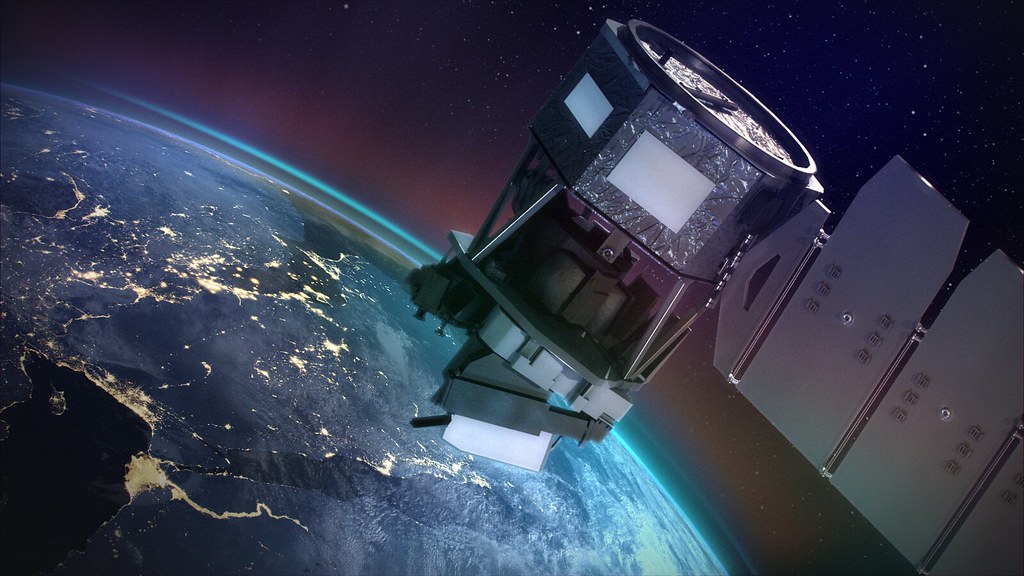
Featured Image Credit: “ICON & GOLD Teaming Up To Explore Earth’s Interface to Space” by NASA Goddard Photo and Video is licensed under CC BY 2.0.
 Retrospect Journal