
Written by Ailsa Fraser
17/09/2023
Content warning: Use of drugs and death of a child.
Joan kneels on the dry earth and snips the poppyheads from their stalks. The frail, mauve petals waft against her fingers, insubstantial. This always takes too long. The sun is already sidling over the horizon to pry at the grasses and the winking windows of the house, so she takes them inside and gets to it.
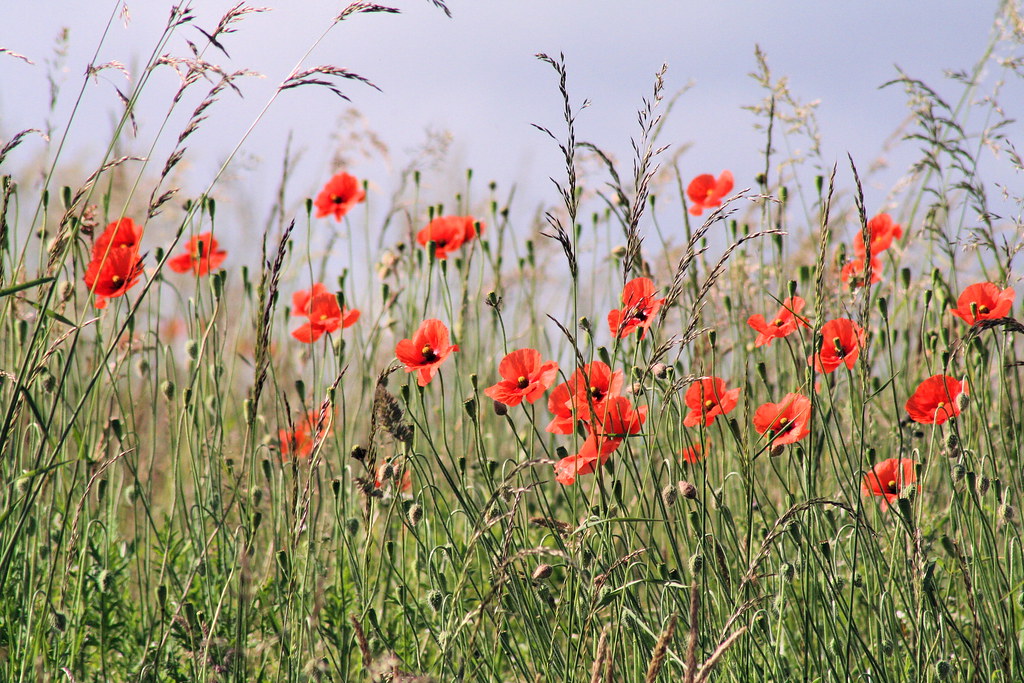
The kitchen is still in shadow, the predawn light as pale and sickly as Susan. She situates herself at the table to work. The newly picked ones go to the side to dry out; she picks out of her collection of dried ones enough to do this job, right now, and starts splitting them. The poppy seeds themselves spill over her fingers, tiny and black like fleas. She scrapes them up from the table and deposits them to the side as well, glancing to her right out of the window as she does. The sun is still rising, its fingers now fondling the poppies at the bottom of the garden themselves. The opium poppies look as washed out and delicate as ever, but the red poppies glow like drops of blood in the light.
She’ll need to make sure there’s more of them still next year, too. The poppy seeds go in a box on the side, already full to the brim.
Joan always likes shredding the poppyheads. It’s cathartic in a way that few things are, and with Martha and Susan more than sound asleep, she doesn’t have to try to be quiet. In what feels like the blink of an eye they’re just a pile of battered straw on the table in front of her. Then she heats up the stove and stirs them in.
The view out of the window is dismal, if not abysmal. The poppies still wave happily, casting shorter and shorter shadows with every inch the sun gains in the sky, and the cracked fields look harsher as the light grows more intense. Even if those aren’t her fields anymore, she can tell they’re less than what they used to be. Drier, sadder, more desperate. She was right to sell them to her neighbour. Even if it left her sitting here, making poppyhead tea while the hours ticked forwards until the gang master arrived, they wouldn’t have survived if she hadn’t.
“Are you not gone already?”
Joan didn’t hear her mother waking or coming down the stairs, so she turns abruptly, nearly spilling the tea and the pan it’s in. The straws are mushing, now, she observes distantly; it will be time to strain it soon, and one glance back at the sun tells her more time has passed than she bargained for.
Martha staggers in and leans on the table, haggard and worn. She’s not in the daze she usually is, which concerns Joan; that means she’s in pain.
“The meeting time is—” Joan looks down at the tea stewing in the pan then back at Martha, and the lie dies in her throat. “I’m making you more tea.”
Martha waves a hand. “I can survive without it a morning. You drink too much of it.”
“I don’t drink it.”
“You give me too much of it. It’s just pain. I don’t like feeling…” She hesitates, then looks at Joan. Joan turns back to the pan, stirring, though she doesn’t need to. “Out of sorts.”
The poppyheads are thoroughly mushed by now. Joan moves aside the pan and places a cloth over a bowl, pouring the mixture over it. The mush congeals on top of the cloth, while the tea seeps through to the bottom. She pours some of it into a mug. Her hands are almost insultingly steady.
“Make sure you give some to Susan when she wakes up,” she says. “I’ll be gone by then, but she’ll need it.”
Martha takes the mug, at least, looking at Joan closely. Joan doesn’t meet her mother’s eye. “Shouldn’t you be gone now? The meeting time is usually at dawn. Your gang master will be furious.”
“I needed to make—”
“You didn’t need to.” But Martha seems to recognise this is not a productive line of interrogation. Her dark eyes soften, though the frown lines around her mouth don’t. “How long will you be gone? It’s been weeks on end, before.”
“I don’t know. It depends how much the farmers need picking. We’ll do whatever they need—”
“And get paid whatever they want to pay you.”
Martha grits her teeth. “I’ll be back with money when I can. Make sure Susan drinks it all—we’re out of sugar, and you know what she’s like.”
“I do. She’s small and sickly. She’s five, but she looks less than two years old.”
“What are you trying to say?”
Martha cups her mug of poppyhead tea in her hands and gestures to it. “It’s for pain. Sickness. Cramps. Susan isn’t sick.”
“You just said she’s sickly.”
“She’s not sick. She doesn’t need the opium.”
“No.” Joan clears away the pan, taking the excuse to turn her back on her mother. “But you’re sick. And you’re the one looking after her. You don’t need a rambunctious child running around you, eating everything in the first week.”
“I raised you.” That doesn’t make either of them laugh the way it used to. “And she hardly eats anything when you’re away. She’s going to starve from her lack of appetite.”
Joan pauses, still with her back to Martha, and looks out the window again. The sun is fully up now, but the horizon is still blood red. It’s like a bank of poppies—not opium poppies, but real poppies. Farmer’s poppies, spraying the upturned edges of a fertile field.
“I’m worried about her,” Martha urges.
“I’m worried about all of us.” Joan keeps looking out at those fields, dried and cracked. They used to be hers. “It won’t be a good harvest this year.”
Martha snorts. “No. Not when the floods rush in to carry it away.” She waves her arms, even though that must hurt. “Even this little house! Then you won’t have anything to worry about anymore.”
“Don’t say that.”
“I remember before they drained them dry,” Martha says wistfully. “Regular floods, but manageable ones. The marshes were so full of fish you could reach in and grab one. Our family had a whole flock of sheep to graze—”
“You don’t remember,” Joan scoffs. “They drained the fens a hundred years ago.”
Martha huffs. “My grandmother remembered.”
“You’re not your grandmother.”
“The gang master will be coming soon,” Martha warns. “I know— I know you work hard. Go and work hard. I can look after Susan. You don’t need to look after all three of us at once.”
“You can’t look after Susan, Mother. You can’t look after yourself.”
Martha sighs and puts her mug down, but she doesn’t argue with that.
“I need to go,” Joan tries again. “I can try to take a piece of whatever’s left.”
Martha waves Joan off, trying her best to smile for her. When she leaves, she shuts the door behind her.
The sun is high, now. The kitchen is flooded with light. Martha, leaving the mug of poppyhead tea sitting firmly on the table, goes to wake up Susan. It is as she feared. They all sleep together in the same bed, and when Martha woke, she had not failed to notice how still and small Susan was. Perhaps she shouldn’t have tried to talk to Joan, like that. It would have only made her reaction worse.
As it is, she has anywhere between a few days and a few weeks to decide how to tell her about this.
But she doesn’t let herself dwell on grief. Instead, she goes downstairs and pours the poppyhead tea onto the dry earth outside the kitchen window. It bounces and bubbles. After a second, Martha tosses the box of poppy seeds out of the window as well; they won’t need any more flowers.
She stands there, sinking into herself, her mind acute and the pain in her bones more so. Her eyes seek the horizon beyond the window, and for a moment her cataracts let her imagine that instead of dry fields, she sees marshes, lapping with water, leaping with life.
She prays for a flood.
Featured image credit: “Poppies” by foxypar4 is licensed under CC BY 2.0.
 Retrospect Journal